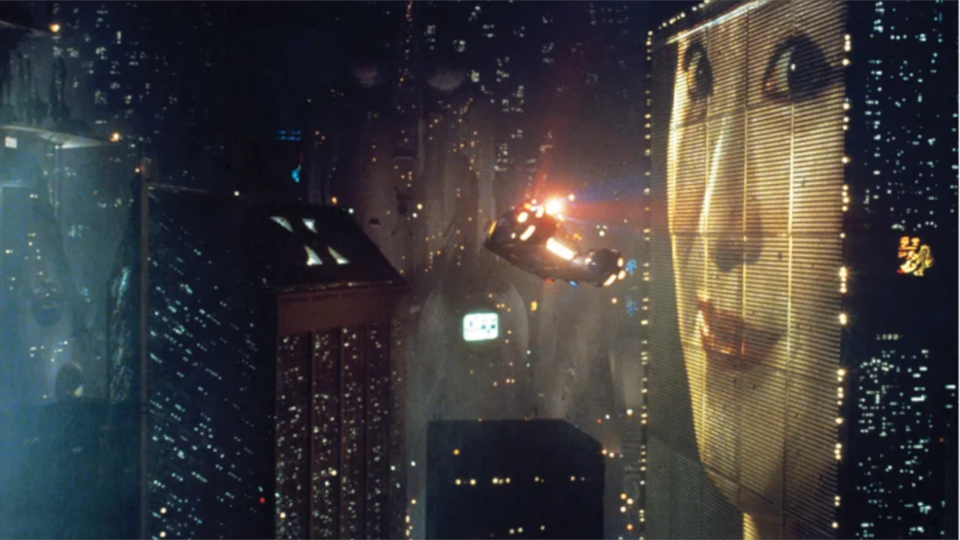
I just finished giving my old article on “Everything ‘Punk” a facelift. It’s polished up, reorganized, and includes more examples than before. Find out what makes a genre “punk” and learn about cyberpunk, biopunk, steampunk, dieselpunk, dreampunk, elfpunk, and more!
Category: Essays
Updated: The History of Science Fiction Literature
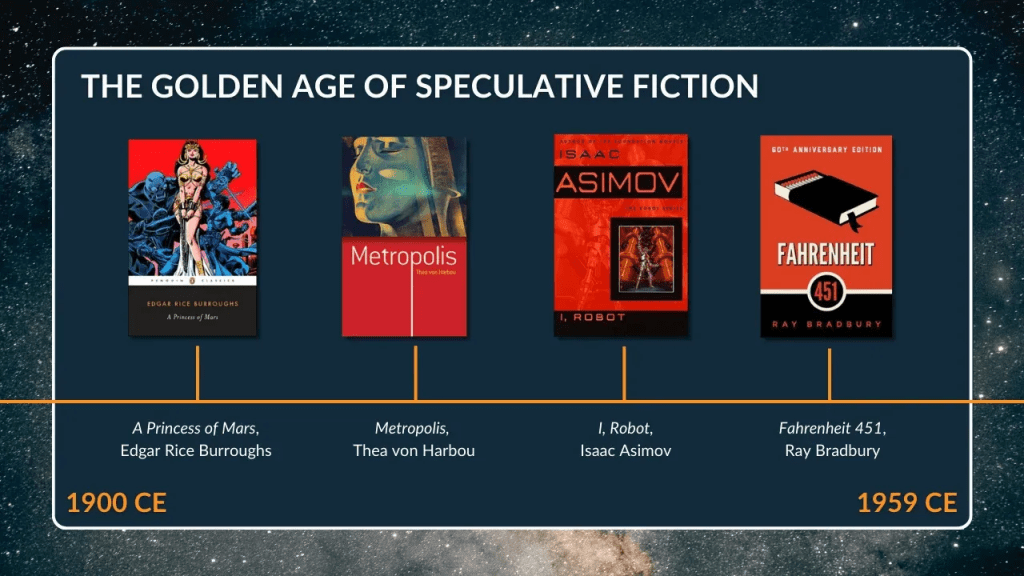
As part of the complete overhaul of this website, I just finished updating my essay on The History of Science Fiction Literature. Learn what science fiction is, explore the past of this massive genre, and speculate on where it’s going from here.
A short excerpt from the essay:
Exploring all that is encompassed by the name science fiction can be a daunting proposition. Like daring explorers setting out to discover uncharted worlds, this essay takes the first steps into the beyond by first delving into the past. After all, they say you can’t know where you’re going if you don’t know where you’ve been.
Read the full essay here!
More Subgenres of Fantasy Literature
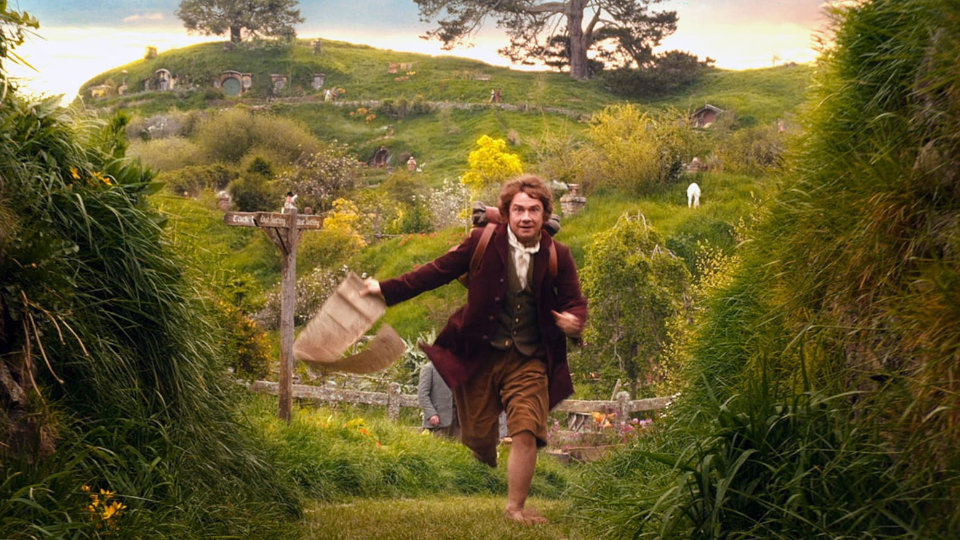
Our five-part exploration of fantasy literature is now complete! Originally presented five years ago as a three-part exploration, I’ve gone through and completely revised and rewritten most of the series and greatly expanded on it. In this part, you’ll find short descriptions and examples of eighteen different subgenres of fantasy literature! This includes dark fantasy, grimdark fantasy, military fantasy, flintlock fantasy, urban fantasy, paranormal romance, gaslamp fantasy, and more! Below is a snippet of the introduction to this new essay, along with a link to the full piece:
One of the fascinating things about fantasy literature is how many different types of stories fall under this massive umbrella genre. Everything from elves and goblins in a medieval setting to witches and vampires in the modern day can be considered fantasy. This has led to a plethora of subgenres that help us communicate and identify what kind of fantasy a story is. The number of these is growing all the time, so it’s hard to even count them all. In this essay, we’ll take a closer look at some of the most enduring, popular, and interesting of these.
Click here for the full essay!
Or, if you want to start from the beginning and read through the whole series in order, you’ll want to head over to The History of Fantasy Literature.
High Fantasy and its Major Subgenres
Great news! The total remodel of bkbass.com is steaming along, and I’m going through my old essays, articles, and musings to completely revise their contents and presentation.
Previously, I had a series of three essays on fantasy literature. They’re getting such an overhaul, though, that there will now be five!
The third of these, High fantasy and its Major Subgenres, is now live on the website. Here’s a quick preview:
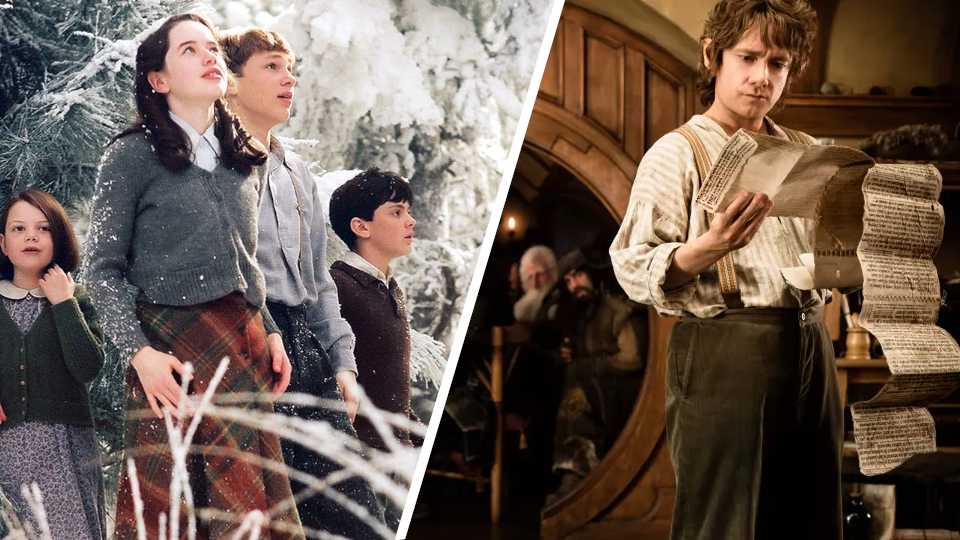
If the first things to come to mind when you think of fantasy are treks across unknown realms, sword-swinging heroes, and soaring dragons, you’re probably a fan of this side of the fantasy coin (the other side being low fantasy). Encompassing some of the oldest and most famous examples of fantasy literature, high fantasy takes us on a journey to realms wholly of the imagination, which act as a playground for almost limitless storytelling possibilities. While heroic quests are the mainstay of the genre, everything from teenage romances to murder mysteries to global wars involving the gods themselves can be found under this broad umbrella of fantasy fiction.
The Fantasy Divide: Low vs High Fantasy
Great news! The total remodel of bkbass.com is steaming along, and I’m going through my old essays, articles, and musings to completely revise their contents and presentation.
Previously, I had a series of three essays on fantasy literature. They’re getting such an overhaul, though, that there will now be five!
The second of these, The Fantasy Divide: Low vs High Fantasy, is now live on the website. Here’s a quick preview:
When exploring fantasy literature, there is a clear line that can be drawn down the middle of the genre. On one hand, some fantasy stories take us on journeys contained within fantastic worlds. On the other, fantastic elements encroach on our reality or we travel from the real world to a fictional one.
I feel that at the very top of the hierarchy of fantasy subgenres lie high fantasy and low fantasy. Unlike other subgenres, which authors routinely mix and match to brew up their own unique magical potions, these categories exist as two sides of a coin, and that coin encompasses all of fantasy literature.
The History of Fantasy Literature
Great news! The total remodel of bkbass.com is steaming along, and I’m going through my old essays, articles, and musings to completely revise their contents and presentation.
Previously, I had a series of three essays on fantasy literature. They’re getting such an overhaul, though, that there will now be five!
The first of these, The History of Fantasy Literature, is now live on the website. Here’s a quick preview:
If you’ve found yourself here, you probably love fantasy literature. One of the most fascinating things about the genre, I think, is where it came from and how it became what it is today. I’m also enthralled by the many fantasy subgenres and the nuances of how they explore the fantastic in different ways.
Navigating fantasy literature and its myriad subgenres can be a daunting task. In this first leg of a multi-part journey, we will discover what the fantasy genre is and explore the history of fantasy literature with notable examples of authors and works that shaped the genre.
The History of Speculative Fiction
I’m excited to share that I have a new article appearing on Campfire Learn: “The History of Speculative Fiction and How to Write It“.
Image (C) Campfire Technology, LLC, 2023
From the article’s introduction:
A multiverse of possibilities may spring to mind when considering the term speculative fiction, from dragons soaring over verdant meadows to massive starships exploring the cosmos.
By contemporary reckoning, it comprises many genres and has a lineage that far predates its name.
To better understand speculative fiction, let’s go on a journey through its rich history and discover what its exciting future may hold.
Be sure to check out the full article here, and discover more amazing writing and worldbuilding advice on Campfire Learn!
New Article: From Protagonist to Antagonist
From protagonists to side characters and from heroes to villains, we often think of our characters in terms of the roles they play in the story. There is much terminology used for various roles, often with overlapping meanings, and this might seem daunting to a new student of literature or an aspiring author. An example of this would be the aforementioned protagonist and hero, which on the surface seem synonymous, but are actually denoting two very unique roles in a story that—while they often are merged—are not mutually inclusive.
In this article, we will first explore the historical origins of some familiar and some less common terms from the traditions of Greek drama, then move on to comparing them to modern cinematic and literary terminology. After this, we will explore the different roles characters play in storytelling apart from their prominence in the story. While many of the terms we will be addressing draw from stage and screen, they apply equally to literary theory.
Read the full article here
Setting the Mood – Article
It was a dark and stormy night…
Paul Clifford (1830) by Edward Bulwer-Lytton
This line is quite arguably one of the most famous clichés in all of literature. It’s become so cliché, in fact, that I would venture that most people can quote it and that few people know of its origins. Of course, when Bulwer-Lytton first wrote it, it wasn’t a cliché. The opening to Paul Clifford — a tale about a highway robbery set during the French Revolution — has an obvious purpose: to set the mood for the book.
Join me here as I disassemble this phrase and the sentence it’s a part of, and learn more about how to write an effective opener for your own story.
The Journey Home: Part One
I’ve wanted to be a writer since I was in 5th grade in 1989. I had a “Homeroom” class that was essentially flex time. We could do whatever we wanted if it was one of three things: homework, reading in a textbook, or reading from a set of specific books provided by the teacher. I read the books. I went through several that year, more than I can remember. A few stand out. Where the Red Fern Grows by Wilson Rawls is one of them. A collection of Edgar Allen Poe’s work is another. I don’t remember the specific title, edition, or publisher; but the book I ended up really falling in love with was a collection of Greek mythology.