When regarding the mark an author has left on popular culture, few can compare to the impact H.P. Lovecraft has had. From the relative obscurity he suffered at the time of his passing, Lovecraft has gone on to become somewhat of a household name. He created an entire fictional mythology that continues to fascinate readers to this day, and his work has inspired not only other authors, but has led to the creation of a plethora of tabletop games, video games, films, and television either directly based on or inspired by his works.
The Life of H.P. Lovecraft
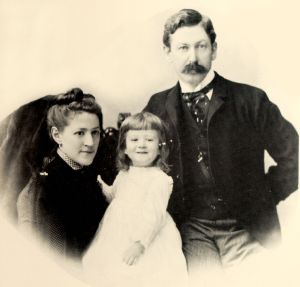
Howard Phillips Lovecraft was an only child born in Providence, Rhode Island in 1890. His father was committed to a mental hospital in 1893 and died five years later, possibly both caused by syphilis, when Howard was only eight years old. After this, he and his mother moved in with her two sisters and her father, successful industrialist Whipple Van Buren Phillips. Suffering often from illness of his own, Howard spent much of his time at home and did not attend formal schooling on a regular basis as a child.
His grandfather formed a close bond with the young Howard, who found in his new home a library that would build the foundation of his later literary career. Whipple encouraged young Howard to study the classics, and among the influences found there were Edgar Allen Poe, Lord Dunsany, and Homer.
As Howard grew and his health improved, he attended school more regularly and found another interest in the sciences. He dabbled in the study of chemistry at first, and later formed a great interest in astronomy. His first forays into writing were astronomical articles, and he was first published in 1906 with a letter on the subject to The Providence Sunday Journal. He continued writing articles on the subject for various newspapers across the eastern U.S. for the next ten years.
During this time leading up to his career as a fiction author, several tragedies befell H.P. Lovecraft. His grandfather died in 1904, and with the financial affairs of the estate not managed correctly, the family home was lost. Howard and his mother then lived in a modest apartment, and he failed to complete high school and obtain a diploma due to a mental breakdown. His mother also suffered from a mental collapse in 1919, was admitted to the same hospital that his father had been, and died there in 1921. It is surmised that she also suffered from syphilis.
H.P. Lovecraft spent much of his life as a recluse, both before and after his mother died. His most regular contact with the outside world was his writing. Beyond his fiction published in pulp fiction magazines, notably Weird Tales, much of his writing took the form of an astounding number of letters to various scholarly institutions, publications, and editors, with some estimates placing the total number of them around 100,000. It is interesting to note that one of the closest bonds to come from these correspondences was with Robert E. Howard, author and creator of Conan the Barbarian and other popular characters.

H.P. Lovecraft married Sonia Haft Greene in 1924 and moved into her apartment in Brooklyn, but only lived with his wife for a year before she was committed to a sanatorium. She later moved to Cleveland to pursue career interests, and they divorced in 1929. Howard then moved to a small apartment near Red Hook. Many surmise that coming from the insular, aristocratic New England upbringing to living in the bustling, multicultural New York City may have contributed to Lovecraft’s infamous racisms and antisemitism, ideas that appear in his writing by way of expressing fear of the unknown and unfamiliar people.
Lovecraft lived out the rest of his life in poverty, struggling to support himself and even turning to ghost writing to avoid abject destitution. He died—almost penniless and in relative obscurity—from intestinal cancer in 1937.
Lovecraft’s Cthulhu Mythos
Looking back at the life of H.P. Lovecraft, one can already see some common themes that might crop up in his fiction: mental illness, death, and the helplessness one feels when their life takes unexpected turns which they can do nothing about. His isolationist lifestyle likely played a large role in his intolerance of people unlike himself. All of this, coupled with his fascination with astronomy, combined to create the environment where H.P. Lovecraft explored his own fears. Fear of the unknown—or even simply the unfamiliar—and the insignificance of mankind in the face of a vast cosmos flourished under these circumstances.
The hallmark result of this convergence was the creation of what is known as the Cthulhu Mythos. While some argue that it’s not a part of the official mythos, others say it began with the publication of “Dagon” in 1919. The first expansion of the mythos, and what some say is the first actual story set within the bounds of it, was “The Call of Cthulhu”, published in 1928. Lovecraft went on to write twenty-three stories considered to be central to the mythos before he died. The Cthulhu Mythos, named for the eponymous central figure of “The Call of Cthulhu”, would form the inspirational foundation from which would spring the genre of cosmic horror.
Many authors would add to the mythos over time, but one of the most notable authors to contribute to it actually pre-dated its creation. In 1895, Robert W. Chambers published an anthology titled The King in Yellow. Lovecraft read this in 1927 and incorporated elements of it into his own work, and students of the genre have retroactively considered it to be a part of the Cthulhu Mythos.
The Legacy of H.P. Lovecraft
While Lovecraft died in relative obscurity, his friend and anthologist August Derleth endeavored to keep his work in print. Lovecraft’s writings would later experience a resurgence in popularity and the mythos would be expanded upon by dozens of authors. Notably, the likes of Stephen King, Robert E. Howard, Fritz Leiber, and Robert Bloch have contributed to expanding Lovecraft’s mythos. In the twenty first century, the mythos has become a mainstay of popular culture, appearing in great numbers (especially since Lovecraft’s work became public domain) in games, films, and television.
Enough tabletop games have been made based on the Cthulhu Mythos that you can look up lists ranking the best of them. Notable among these are Eldritch Horror, Arkham Horror, Mansions of Madness, Elder Sign, and The Call of Cthulhu tabletop roleplaying game. You can also easily find video games based on or inspired by Lovecraft’s work, such as Call of Cthulhu, The Sinking City, Bloodbourne, Conarium, and Sherlock Holmes: The Awakened. Yes, somebody combined Holmes and Lovecraftian horror.
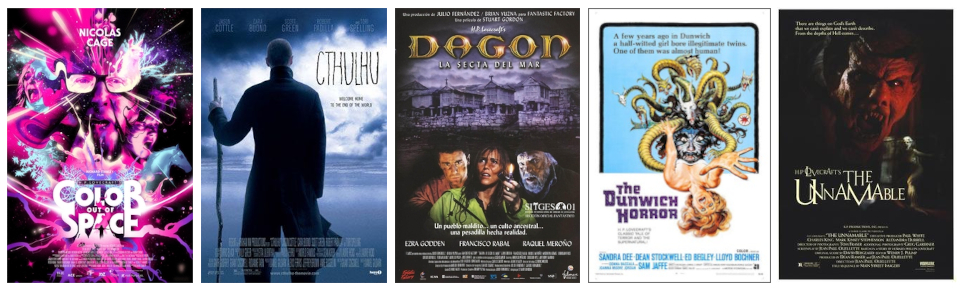
A great number of films have either been direct adaptations of Lovecraft’s writings or inspired by them. A few examples of most direct influences are Color out of Space (2019), Cthulhu (2007), Dagon (2001), The Dunwich Horror (1970), and The Unnamable (1988).
That the concepts and stories Lovecraft created in his writing have branched into so many different mediums and endured for almost a hundred years shows that his influence is unmatched by even the most popular modern authors. However, don’t take my word for it. Just ask one of those popular modern authors what they think.
I think it is beyond doubt that H. P. Lovecraft has yet to be surpassed as the Twentieth Century’s greatest practitioner of the classic horror tale.
Stephen King

 B.K. Bass, Author and Editor