
Cosmic horror. To the initiated, those words bring to mind images of scheming cultists in dark basements, gibbering monstrosities lurking in the shadows, elder gods beyond the ken of mortal reckoning, and the unthinkable vastness of the universe itself. At its heart, the genre is about the insignificance of mankind in the face of these unknowable terrors.
The oldest and strongest emotion of mankind is fear, and the oldest and strongest kind of fear is fear of the unknown.
H.P. Lovecraft
What is Cosmic Horror?
For the uninitiated, the scope of the genre may often be misunderstood. It has experienced a rise in popularity across a variety of media, from film to electronic and table-top gaming, but these only scratch the surface of the true depth of the genre. Games like Arkham Horror or Elder Sign by Fantasy Flight Games give us a glimpse into it, painting a picture full of standard genre elements.
In cosmic horror, we often see early twentieth century amateur detectives uncovering clues of an ancient evil, battling cultists and monsters, and fighting to keep the Elder Gods from escaping an eternal prison. At a glance, one might surmise that the genre consists solely of these elements. And tentacles… LOTS of tentacles.
But cosmic horror—or Lovecraftian horror as it is interchangeably referred to—runs far deeper than detective stories with cultists, strange monsters, and ancient deities. At its heart, the genre explores the terrible feeling one gets when considering that reality is so vast that we can never truly understand it and that our place in the cosmos is one of meaninglessness and helplessness. In this way, cosmic horror deals much with the philosophy of nihilism, which rejects the idea that human life has any inherent meaning and accepts our insignificance in the universe. Some, known as optimistic nihilists, find this revelation to be freeing. Cosmic horror, however, considers the potential fear these ideas may cause and takes it a step further by proposing there are things outside our ability to understand or perceive that are dangerous and terrifying, such as monsters or malevolent gods.
The core element that defines cosmic horror is that it plucks at the strings connected to two fears that arguably every person shares: fear of the unknown and fear of insignificance. Lovecraft himself may have said it best when he said “it is hard to create a convincing picture of shattered natural law or cosmic alienage […] without laying stress on the emotion of fear.”
Despite the term “cosmic” in cosmic horror, few stories in the genre deal with the cosmos itself. Rather, they are usually more grounded in the human experience. While some science fiction tales set in space have taken inspiration from cosmic horror, many more stories in the genre are set on earth. Quiet a few, in fact, deal with locations such as the seaside or remote mountains. What horrors might lie in the uncharted depths of the ocean? What secrets are hidden atop remote mountains? Essentially, any remote location obscured from total human understanding is fodder for cosmic horror. In fact, many of the original tales of the genre took place in the fictional town of Arkham, Massachusetts, created by H.P. Lovecraft, the father of the genre.
H.P. Lovecraft: The Man Behind the Mythos
It’s impossible to talk about the origins of cosmic horror without discussing Howard Phillips Lovecraft (1890 – 1937). His tragic life and unique upbringing shaped much of what went into his fiction, and his troubled worldview contributed to the focus on the fear of the unknown and the helplessness of the mortal man.

He was born an only child in 1890 in Rhode Island and had a youth marked by death, first of his father, then his grandfather, and finally his mother. Both of his parents were institutionalized in the same mental hospital before their deaths, presumably as a result of a syphilis infection. Howard was mostly self-educated by way of his grandfather’s library, and though he would later attend high school, he failed to graduate due to a mental breakdown. His time as a young adult was one of financial struggle, the loss of the family estate, and mental illness, culminating in an estranged marriage. Lovecraft eventually moved from Rhode Island to New York City. He studied chemistry and later astronomy, the latter of which would play a large role in his career as a fiction writer.
H.P. Lovecraft channeled much of his life’s experiences into his writing. Growing up surrounded by death and mental illness and later peering into the depths of the cosmos, it is no wonder that his writing focused on the human mind’s ability to comprehend the vastness of the universe. He is also infamous for his racism and antisemitism, and this fear of the “other” also plays a large role in much of his writing. Many of his stories contributed to shaping a common mythology known as the Cthulhu Mythos, which is a cornerstone of popular culture nearly a hundred years later.
For a more in-depth look at the life and legacy of H.P. Lovecraft, you can explore my short biographical essay about him on this website: H.P. Lovecraft: Herald of the Elder Gods.
Cosmic Horror Beyond Lovecraft
Beyond the dozens of authors who have contributed stories to the Cthulhu Mythos—including Stephen King, Robert E. Howard, Fritz Leiber, and Robert Bloch—there are numerous representations across all kinds of media. As mentioned earlier, one can find everything from board games to video games to film and television that draw heavily enough from Lovecraft’s work to be considered part of his world.
Notable of these are the tabletop games Eldritch Horror, Arkham Horror, Mansions of Madness, Elder Sign, and The Call of Cthulhu roleplaying game; the video games Call of Cthulhu, The Sinking City, Bloodbourne, Conarium, and Sherlock Holmes: The Awakened; and the films Color out of Space (2019), Cthulhu (2007), Dagon (2001), The Dunwich Horror (1970), and The Unnamable (1988).
The legends that sprung from the mythos have since gone on to become part of our culture. One could argue that the Cthulhu plushie, available from an array of manufacturers, is the seminal example of how the mythos is ingrained within our collective cultural consciousnesses.
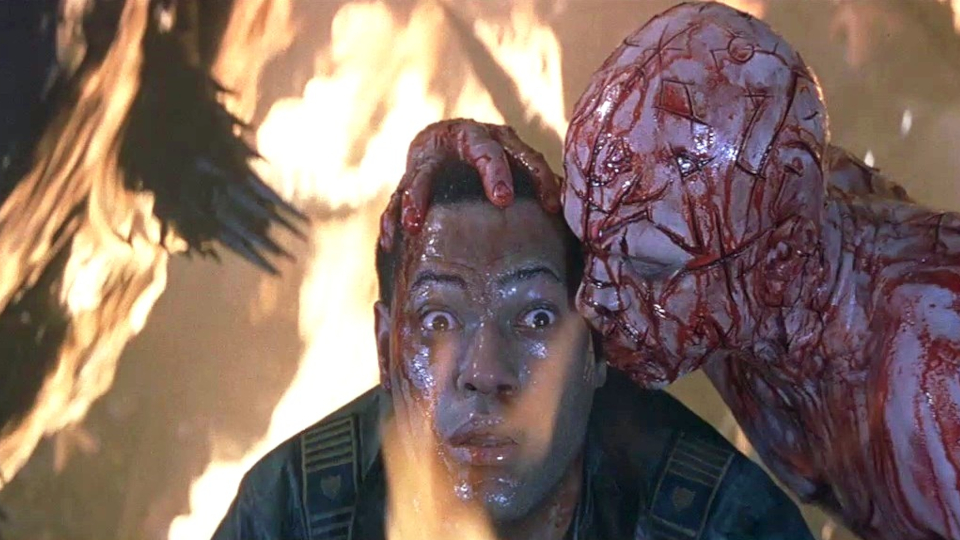
This deep correlation between the work of H.P. Lovecraft and the genre of cosmic horror has even led some to the assumption that the two are mutually inclusive. While many authors, game designers, and film makers do draw heavily upon the Cthulhu Mythos or set their works firmly within this shared world, there are as many others who see it as a source of inspiration and delve into the themes it represents without tying into that shared universe. The Thing (1982) by John Carpenter and Event Horizon (1997) by Paul W.S. Anderson are wonderful examples of a films that utilizes many themes of cosmic horror without directly tying into the mythos created by H.P. Lovecraft.
My Journey into the Unknown

Inspired by the work of H.P. Lovecraft, like so many others who have come before, I have taken my own leap into the realms of the unknown and the unknowable in the form of my first cosmic horror novel: Parting the Veil.
I’m proud to say Lovecraft is a primary influence behind this work, but my goal was to evoke the themes of the terror of the unknown and what lies beyond our perception rather than to write another story in the mythos he created. Rather than using the Cthulhu Mythos, I drew upon classic folklore and legends to shape what lies beyond the veil of human perception.
Rather than listing the various elements I feel contributed to the book, I’ll allow a colleague of mine to give you his perspective of what the results were:
This story includes aspects of Lovecraft, Verne, and the Indiana Jones series, yet the author has a voice that is distinctly his own.
Professor Cognome on Goodreads
What is Parting the Veil?
Peru: 1939
American treasure hunter Richard Jericho and British anthropologist Wilkins Chapman have uncovered antiquities from around the world. But in a long-lost jungle ruin, they discover something more than they expected. As war brews in Europe and the fabric of reality comes apart, they journey across the globe chasing clues. Answers leads to more questions as they piece together a puzzle older than primal memory itself.
And the more they part the veil, the more of what lies beyond the veil spills into our reality.
Parting the Veil is available now!
Find it on Amazon in paperback or on Kindle, or at other eBook retailers.
 B.K. Bass, Author and Editor